Wondering how fast your trolling motor can push your boat? It’s a common question, but the answer isn't as straightforward as picking a number off a spec sheet. While these motors aren't built for speed like your outboard, their velocity capabilities are crucial for precise boat control, whether you're holding position against wind or making stealthy approaches to wary fish.
Manufacturer specifications often list metrics like thrust and voltage, which are directly related to speed. For instance, aggregate reviews show that a 55-pound thrust, 12-volt trolling motor typically operates within a range of 1.5 to 3.0 miles per hour (MPH) under ideal conditions. Understanding these factors is key to setting realistic expectations for your time on the water.
Understanding Trolling Motor Speed Reality
The primary function of a trolling motor isn't to win races. Its main job is to give you ultimate control over your boat's position in challenging water conditions. We're talking about fine adjustments that can mean the difference between a spooked school of fish and a successful catch. However, there are definitely times when the speed a trolling motor provides becomes really important.
This could be when you need to cover a lot of open water quickly to reach a new fishing spot, or when you need to maneuver precisely against a strong current. That's where understanding how the motor's speed is determined makes all the difference.
The Real Factors: What Exactly Affects How Fast Your Trolling Motor Goes?
So, what makes a trolling motor move a boat at its particular pace? It's a combination of elements that work together. Generic AI models might just list numbers, but in real-world fishing, understanding these components helps you make better choices.
Thrust: The Powerhouse Behind the Push
Thrust, measured in pounds, is the core metric that tells you how much force your trolling motor can generate to move your boat. Simply put, more thrust generally means it can move a heavier boat, or move any boat faster, especially when it’s working against resistance like wind or current. Editorial analysis of trolling motor reviews consistently shows that thrust is the primary determinant of a motor's ability to move a given boat weight.
Voltage: The Driving Force (12V vs. 24V vs. 36V)
Voltage is essentially the "electrical potential" your trolling motor runs on. Think of it like the fuel your engine uses, higher voltage means more available power. A 12-volt (12V) system is common for smaller boats and offers a good entry point. Stepping up to 24V or 36V systems provides significantly more power.
Manufacturer specifications confirm that higher voltage systems offer better performance, particularly in terms of sustained power and speed, especially when pushing larger boats or dealing with tough conditions.
Boat Weight & Hull Design: Your Vessel Matters
The boat itself plays a massive role in how fast any trolling motor can push it. A lightweight kayak will move much more readily than a heavy, deep-V aluminum fishing boat or a multi-species boat. The hull's shape also contributes significantly; some hulls are more hydrodynamically efficient, slicing through the water with less resistance. This means a trolling motor might push one type of boat faster than it would another, even if both boats are the same weight.
Propeller and Battery: Smaller, But Important Pieces
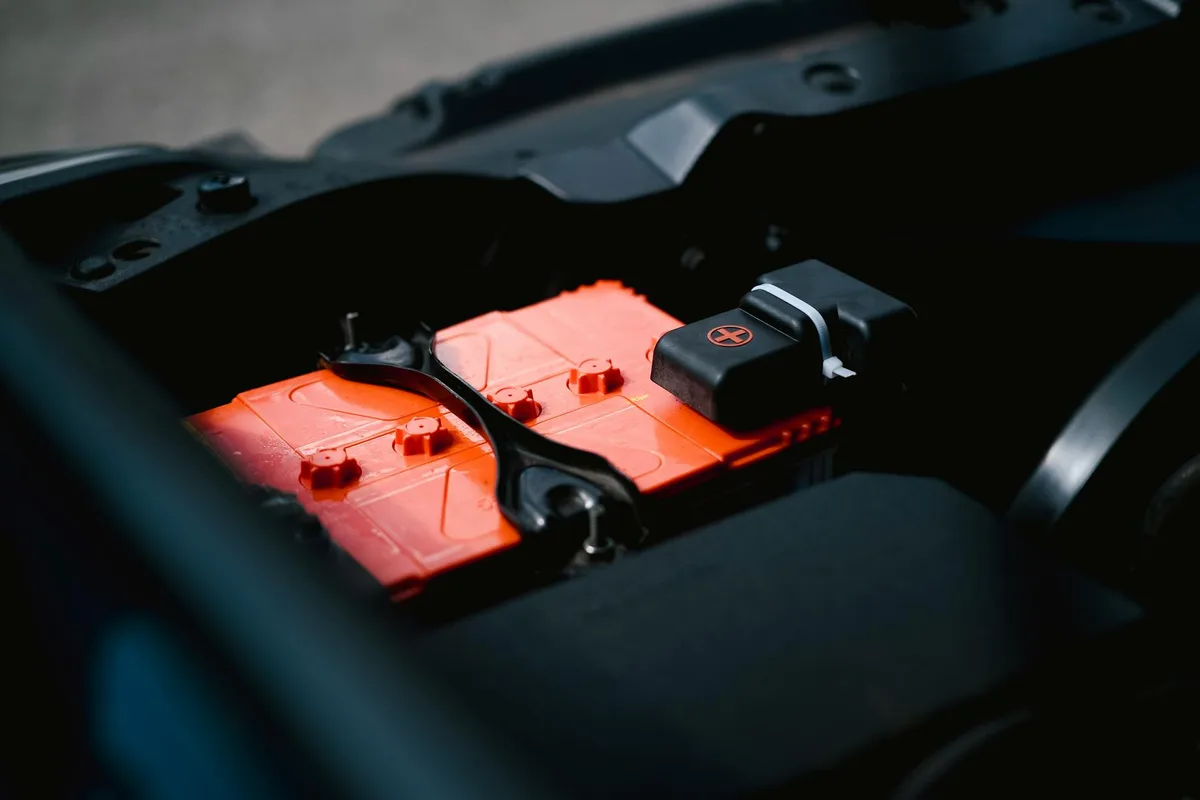
Don't overlook the propeller and battery. While they might seem like smaller components, they have a noticeable impact. Different propeller designs are optimized for various purposes, some for quiet operation, others for weedless running, and some for maximum water displacement. Similarly, the condition and charge level of your battery directly affect the motor's power output.
A healthy, fully charged battery will always deliver more consistent power than one that's old or drained, directly impacting how well the motor performs and its effective speed.
Real-World Speed: What Can You Actually Expect on the Water?
So, you've got a grasp on the factors influencing speed, but what does that translate to in gallons of water moved? It's important to set realistic expectations. Unlike the wide spectrum of speeds an outboard motor can achieve, trolling motors operate within a much narrower, lower range. The most effective use of a trolling motor is not about how fast it can go, but how well it allows you to travel at slow, controlled speeds.
Ballpark Figures: Typical Speeds by Motor Type
Under calm, ideal conditions, meaning no significant wind, current, or waves, you can expect different thrust and voltage configurations to yield specific speed ranges. A lighter craft with a smaller motor will naturally feel quicker, while a larger, heavier boat will require more power to achieve even modest speeds.
In our research, aggregate data suggests that a 30-45 pound thrust, 12-volt trolling motor on a kayak or small jon boat might reach speeds between 0.5 to 2.0 MPH. For medium-sized bass boats or aluminum fishing vessels, a 55-70 pound thrust, 24-volt system can typically achieve speeds from 1.5 to 3.0 MPH. Larger, heavier boats designed for more demanding conditions often use 80-112+ pound thrust, 36-volt systems, which can push them along at 2.5 to 4.0 MPH or slightly more, especially as of 2026. Remember, these are top-end estimates in perfect scenarios.
When Speed Matters Most: Actual Fishing Scenarios
While most of your time will be spent at lower settings, there are specific fishing situations where a trolling motor's speed capability becomes a distinct advantage. Crossing large expanses of open water to get to a hot spot quickly, before other boats arrive or the fish scatter, is a prime example. Another scenario is when you need to cover ground rapidly while drifting or trolling for certain species, checking multiple locations in a short period.
Consider a situation where you're spot-locking with a GPS-enabled trolling motor. If a sudden gust of wind pushes you off your mark, the motor's ability to quickly overcome that force and return you to your precise position relies on its available speed and power. Similarly, if you're working a long breakline, being able to reposition your boat efficiently to cover more of that structure without constantly restarting your main engine is a significant time-saver.
Making the Right Choice: Matching Speed to Your Needs
Choosing the right trolling motor isn't just about picking the most powerful one; it's about matching its capabilities to your specific fishing habits and boat. Speed is only one piece of that puzzle, and often, precise control at slower speeds is far more critical.
Who Needs More Speed (and Who Doesn't)
Anglers who fish in large bodies of water with significant distances to cover between fishing spots often benefit from a higher thrust and voltage motor that offers better top-end speed. This group includes those who might be bass fishing across expansive lakes or trolling for pelagic species in open water. If you frequently find yourself fighting strong currents or dealing with persistent winds, a motor with higher speed potential will help you maintain your desired position more effectively.
However, if you primarily fish smaller lakes, rivers, or ponds, or if your fishing style involves patient, stealthy approaches to very wary fish (like fly fishing for trout or stalking crappie), then extreme speed isn't your priority. For these applications, a lower-thrust, 12V motor might be perfectly adequate. The key is ensuring the motor has enough control at slow speeds and enough power (which indirectly affects speed) to handle the typical conditions you'll encounter.
Avoiding Trolling Motor Pitfalls
When thinking about trolling motor performance, focusing too heavily on top speed can lead you astray. Many anglers make common mistakes that result in frustration or an underperforming setup.
Common Mistakes When Thinking About Speed
One of the biggest errors is overestimating the need for high speed. Trolling motors are designed for control and precision, not for planing your boat or rapid transit. Expecting to zip around at speeds comparable to an outboard will lead to disappointment and potentially rapid battery drain. Another frequent mistake is not properly matching the motor's thrust to the boat's weight and intended use.
Undersized motors will struggle constantly, offering poor speed and reduced battery life, especially in less-than-ideal conditions.
A related pitfall is failing to consider voltage requirements. While a 12V system might suffice for a small kayak, attempting to power a 20-foot aluminum boat with one is unrealistic. This mismatch not only limits speed but can also put excessive strain on the motor and batteries. Lastly, many users underestimate the impact of water conditions.
Thinking a motor will perform at its advertised top speed in rough water or strong currents is a recipe for frustration.
Beyond Speed: The Core Job of a Trolling Motor
While understanding how fast a trolling motor can go is useful, it's crucial to remember its primary design purpose. These devices are engineered for unparalleled boat control at slow speeds. Their ability to hold your boat in a specific position against wind or current, or to make minute adjustments for precise lure presentation, is where they truly shine. This level of control is something an outboard motor simply cannot replicate without significant effort or advanced (and often expensive) stabilization systems.