
What is the Powerhead on My Outboard Motor?
Ever stared at your outboard and wondered what that bulky, central section is called? Let's cut to the chase: that's the powerhead, and it’s the engine itself. It’s where all the action happens to generate the thrust that moves your boat. Understanding this core component is the first step to better understanding your motor's health and performance.
Our research indicates that for most outboard motors, the powerhead is the primary component responsible for generating mechanical power. Manufacturer specifications often detail engine displacement in cubic inches or liters for this section, with common figures ranging from under 50 cubic inches for small trolling motors to over 300 cubic inches for larger, high-horsepower units.
Why Seeing Helps Understand the Powerhead
Sometimes, a good description just doesn't cut it. For something like an outboard motor's powerhead, visuals can make all the difference in understanding its placement and function. Diagrams and actual photos help you connect the dots between the names of parts and where they physically sit on your engine.
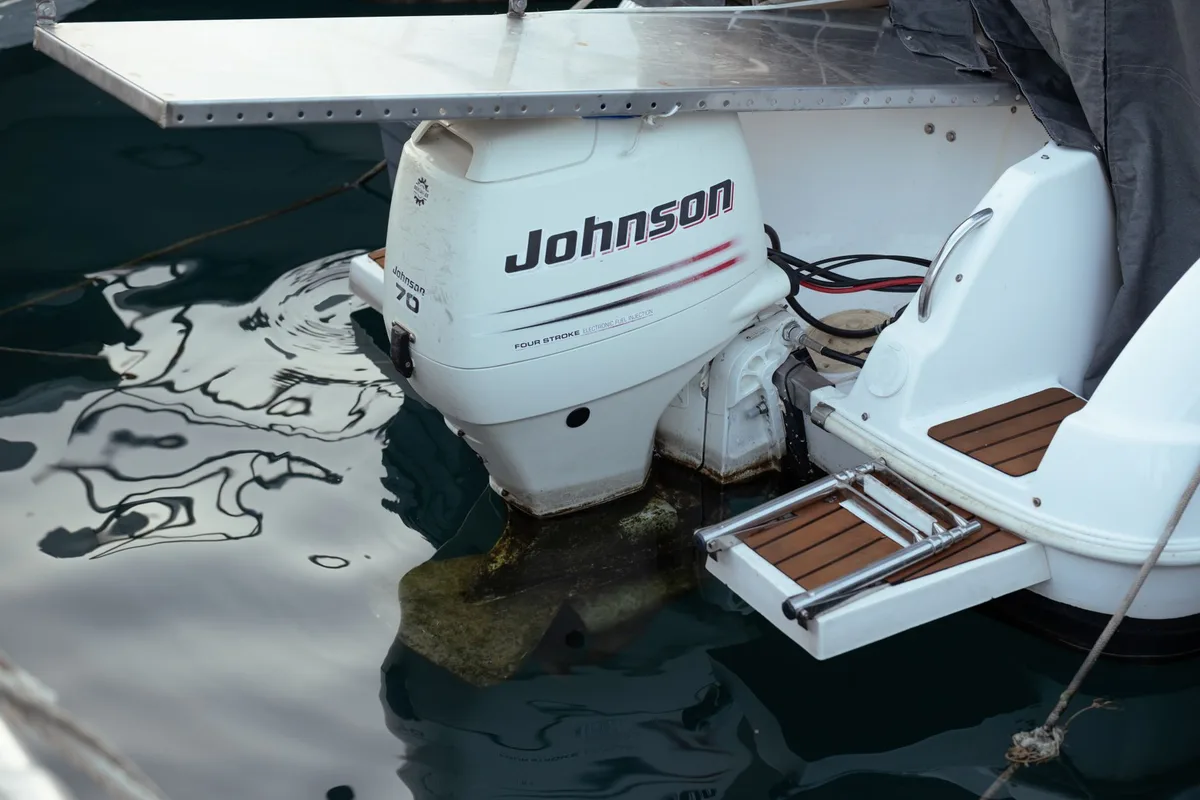
When you're looking at your outboard, the powerhead is the most substantial, upright section, usually topped by the engine cowling. Seeing it helps you orient yourself with the other major parts of the motor, like the mid-section and the lower unit which houses the propeller.
Key Identifiers: Spotting the Powerhead
The powerhead is generally the largest, most solid-looking part of the outboard motor, sitting directly above the narrower mid-section. Its shape is typically rectangular or block-like, and it’s where you’ll find many of the engine’s external fittings, like spark plug wires, fuel lines, and cooling water intake points.
Think of it as the "business end" of the engine. While the lower unit is all about turning a propeller and the mid-section is the connecting piece, the powerhead is dedicated to combustion and rotation. It’s usually secured to the mid-section with several bolts.
What's Actually Inside the Powerhead?
The powerhead isn't just a single piece; it's a compact housing for the intricate machinery that makes the engine run. This is where the combustion cycle happens, transforming fuel into the rotational force that eventually spins the propeller.
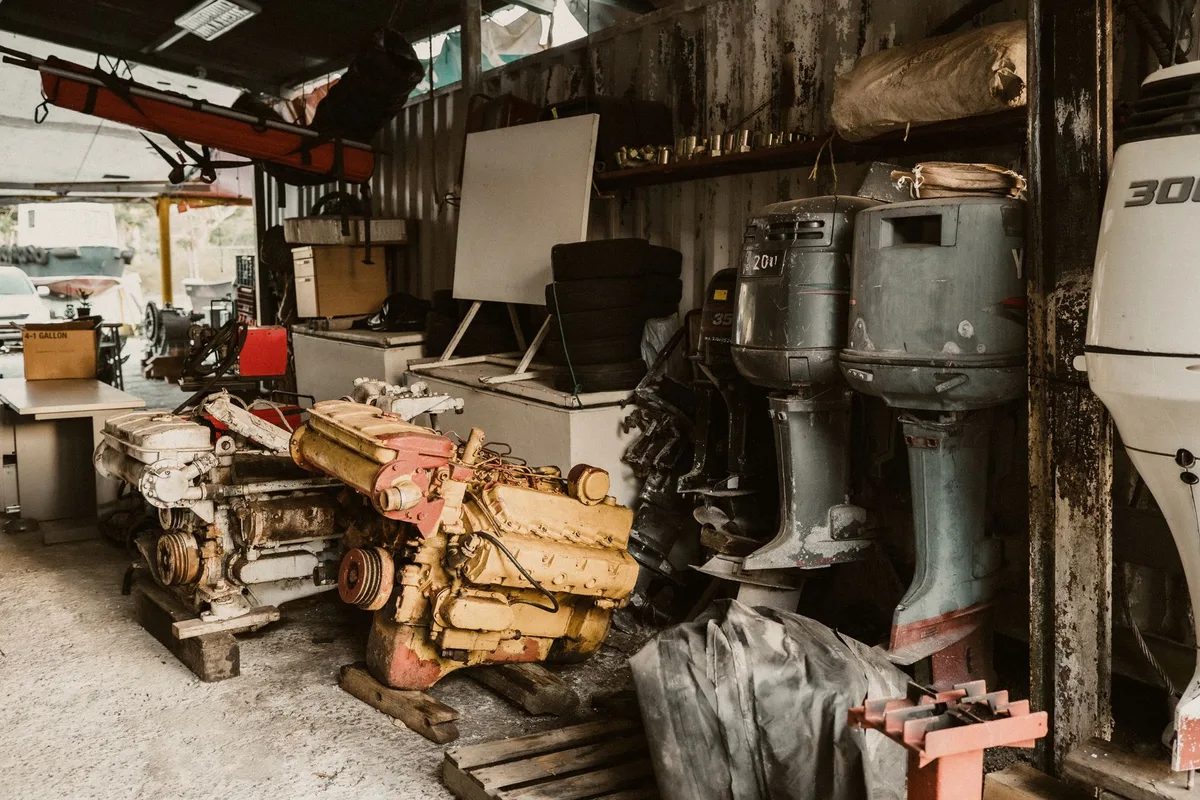
Inside this main engine block are the critical components that perform the heavy lifting. Understanding what’s in there helps explain why maintenance is so important and what might go wrong if things aren't kept in good order.
Cylinders and Pistons: The Engine's Core
At the heart of any combustion engine, including those in outboard motors, are the cylinders and pistons. These parts work in tandem to convert the chemical energy from burning fuel into mechanical motion.
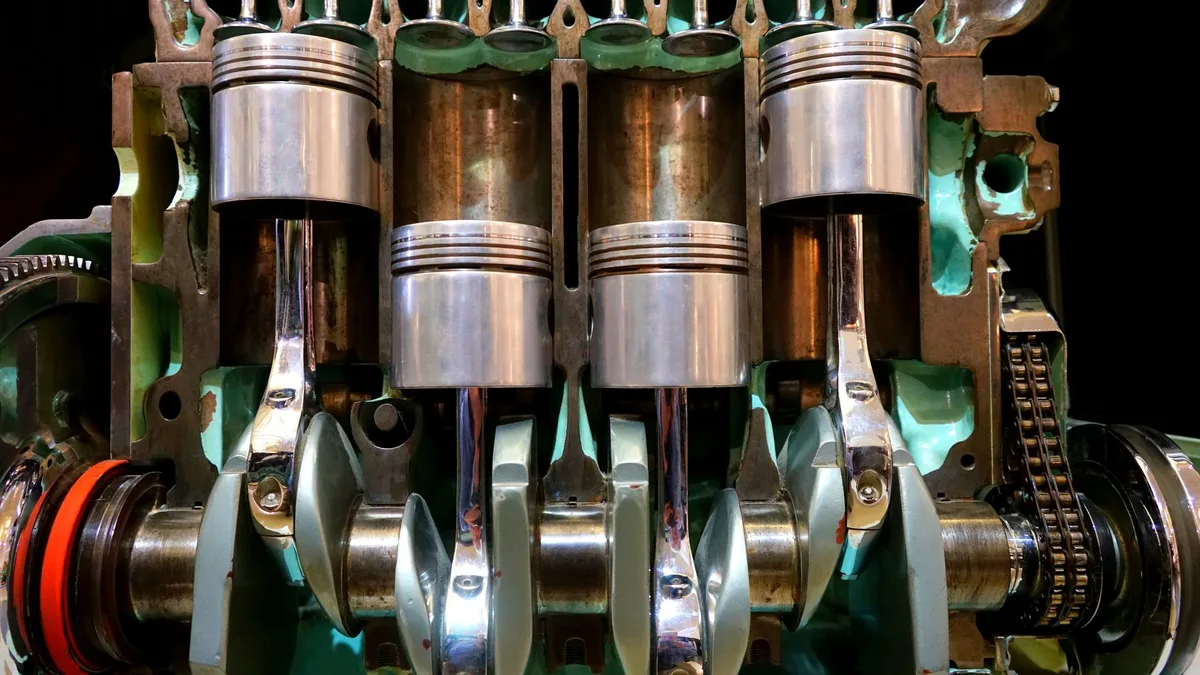
The cylinders are essentially hollow tubes within the engine block. Inside each cylinder, a piston moves up and down. This reciprocating motion is the fundamental action of the engine. For instance, in a typical 2.1-liter four-stroke outboard, you might find four cylinders, each housing a piston.
The precise fit between the cylinder wall and the piston skirt is crucial for compression and preventing exhaust gases from escaping.
Crankshaft and Valves: Making it Turn
The up-and-down motion of the pistons needs to be converted into rotational motion to power the propeller. That's the job of the crankshaft. Connected to the pistons via connecting rods, the crankshaft takes the linear force of each piston stroke and turns it into a spinning output.
The valves are equally vital. They control the flow of air, fuel, and exhaust gases into and out of the cylinders at exactly the right moments. Intake valves open to let the fuel-air mixture in, and exhaust valves open to let the burnt gases out. This precise timing is critical for efficient combustion.
Spark Plugs and Fuel Systems: The Ignition
No combustion happens without ignition, and that's where spark plugs come in. They create an electrical spark inside the cylinder at the precise moment the fuel-air mixture is compressed, igniting it and causing the power stroke.
The fuel system, which delivers the correct blend of fuel and air to the cylinders, is also integrated into the powerhead's operation. This can involve carburetors or fuel injectors, depending on the engine type. Ensuring these systems are clean and functioning correctly is key to maintaining consistent engine performance. For example, manufacturer specifications for a 40-horsepower four-stroke might detail a multi-point fuel injection system designed for optimal atomization and delivery.
How the Powerhead Works for You
The powerhead’s sole purpose is to generate rotational horsepower. Every explosion inside its cylinders translates into a force that turns the crankshaft. This spinning force is then transmitted down through the mid-section to the lower unit, where it spins the propeller and pushes your boat through the water.
Essentially, the powerhead is the engine’s brain and brawn. It’s where the energy conversion happens, taking gasoline and air and turning it into motion. The efficiency and power it produces directly dictate how quickly your boat can accelerate and how fast it can cruise. For example, aggregate reviews often report that outboards with larger displacement powerheads tend to offer better torque for pulling skiers or heavier loads.
Common Powerhead Problems to Watch For
Because it's the engine's core, the powerhead is also the source of many common outboard motor issues. If your motor isn't running right, the problem is very often originating within the powerhead itself.
Engine Sputtering and Loss of Power
When your outboard starts sputtering, losing steam, or just feels weak, it's usually a sign that something is off with how the powerhead is burning fuel or breathing air. This could be anything from a clogged fuel injector or a faulty spark plug to a problem with the compression within the cylinders. You might also notice it's not reaching its top RPMs, which is a direct indicator of reduced power output from the engine.
Overheating and Strange Noises
Overheating is a serious threat to any engine, and outboard powerheads are no exception. If the cooling system isn't circulating water effectively, the internal temperatures can rise rapidly, leading to damaged components. Beyond heat issues, unusual noises like knocking or grinding often point to mechanical problems inside the powerhead, perhaps a bearing issue, a loose connecting rod, or piston slap. Any of these sound alarms warrant immediate attention.
Powerhead Maintenance and Care
Keeping your outboard's powerhead in top shape is less about intricate procedures and more about consistent, fundamental care. Regular maintenance prevents many of the issues we just discussed from even starting. It’s about proactive steps that ensure the engine runs smoothly and reliably for thousands of hours.
One of the most critical aspects is the cooling system. Manufacturer specifications consistently emphasize the importance of flushing the outboard with fresh water after each use in saltwater to prevent corrosion and mineral buildup. This simple step protects the water jackets within the powerhead. As of 2026, official Yamaha service bulletins recommend flushing with a flush kit connected to the engine's flush port for at least 15 minutes.
How to Keep Your Powerhead Healthy
- Regular Flushing: Always flush your motor with fresh water after using it in saltwater or brackish conditions. This removes salt, sand, and debris that can clog cooling passages and cause corrosion.
- Oil Changes (Four-Stroke): For four-stroke outboards, regular oil changes are vital. Using the correct grade of marine engine oil, as specified by the manufacturer, ensures proper lubrication and cooling of internal powerhead components, reducing wear and tear on parts like the crankshaft and pistons.
- Spark Plug Checks: Periodically inspect and replace spark plugs according to the maintenance schedule. Fouled or worn plugs can lead to misfires, poor fuel economy, and damage to the combustion chamber.
- Fuel System Care: Use fresh, high-quality fuel and consider using a fuel stabilizer, especially during off-season storage. This helps prevent fuel system components from gumming up.
Powerhead vs. Other Outboard Parts: What's the Difference?
While the powerhead is the engine, it's only one part of the complete outboard motor system. Understanding its place relative to other components helps you identify problems more accurately. The motor is generally split into three main sections: the powerhead, the mid-section, and the lower unit.
The lower unit (or gearcase) is the torpedo-shaped section that contains the propeller shaft, gears, and typically the water pump. Its job is to transfer the rotational power from the powerhead to the propeller. The mid-section is the connecting piece between the powerhead and the lower unit. It houses the driveshaft that links the crankshaft in the powerhead to the gears in the lower unit, and it also contains the exhaust passage.
Breaking Down the Sections
| Section | Primary Function | Key Components |
|---|---|---|
| Powerhead | Generates engine power and rotational force | Cylinders, pistons, crankshaft, valves |
| Mid-Section | Connects powerhead to lower unit; transmits power | Driveshaft, exhaust tube |
| Lower Unit | Propels the boat; houses gears and propeller | Propeller shaft, gears, water pump, anti-ventilation plate |
Powerhead Specs That Matter
When you're looking at outboard motors, you'll often see specifications that directly relate to the powerhead. These figures give you an idea of the engine's potential performance and its fundamental design. Knowing these numbers can help you understand why one motor might be more powerful or fuel-efficient than another.
One of the most fundamental specs is engine displacement. This measures the total volume swept by all the pistons within the cylinders. A larger displacement generally means a bigger, more powerful engine. For example, a 2.5-liter (approximately 153 cubic inches) powerhead will typically produce more horsepower than a 1.0-liter (approximately 61 cubic inches) powerhead, all else being equal.
Key Powerhead Specifications:
- Displacement: Measured in cubic inches (cu. in.) or liters (L). A larger number usually indicates more potential power.
- Cylinder Configuration: How many cylinders the engine has (e.g., inline-2, inline-3, V4, V6) and their arrangement. This can affect smoothness and power delivery.
- Bore and Stroke: The diameter of the cylinder (bore) and the distance the piston travels (stroke). These dimensions influence engine torque and RPM range.
- Compression Ratio: The ratio of the volume in the cylinder when the piston is at its lowest point compared to when it's at its highest. A higher ratio generally means more efficiency, but requires higher octane fuel.
As of 2026, understanding these specs is crucial when comparing motors for specific boating needs, whether it’s for watersports, fishing, or general cruising.
Why Does Engine Type Matter for the Powerhead?
The type of engine, specifically whether it's a two-stroke or a four-stroke, has a significant impact on how the powerhead operates and the characteristics it delivers. These aren't just technical labels; they describe fundamentally different ways the engine cycles fuel and air to produce power.
Two-stroke engines complete their power cycle in two piston strokes (one up, one down) and one crankshaft revolution. They tend to be simpler, lighter, and produce more power for their size. However, they typically burn more oil and are less fuel-efficient, with higher emissions. Four-stroke engines, on the other hand, require four piston strokes (two up, two down) and two crankshaft revolutions to complete a cycle.
They are generally more fuel-efficient, quieter, and produce fewer emissions, making them a popular choice for modern outboards.
Two-Stroke vs. Four-Stroke Powerhead Characteristics
| Feature | Two-Stroke Powerhead | Four-Stroke Powerhead |
|---|---|---|
| Power Cycle | 2 strokes (up, down) per power cycle | 4 strokes (intake, compression, power, exhaust) per cycle |
| Lubrication | Oil mixed with fuel or injected; burned during combustion | Oil recirculates in a sump; separate from fuel |
| Weight | Generally lighter for equivalent horsepower | Generally heavier due to oil sump and more complex valvetrain |
| Fuel Efficiency | Typically lower | Typically higher |
| Emissions | Higher; burns oil | Lower; cleaner combustion |
| Noise | Louder, often a distinct high-pitched whine | Quieter, smoother operation |
| Complexity | Simpler design | More complex with valves, camshafts, oil pump |
When Might You Need to Work on the Powerhead?
Knowing what the powerhead is also helps you understand when professional attention might be needed. While basic maintenance can often be handled by boaters, complex issues inside the powerhead usually require specialized knowledge and tools. If you're experiencing persistent problems that basic checks don't resolve, it's time to consult a marine technician.
For example, if a compression test reveals low readings across multiple cylinders, it suggests a potential issue with piston rings, cylinder walls, or valves within the powerhead. Similarly, if you hear internal knocking sounds that don't go away even after checking fluid levels, it might indicate bearing damage to the crankshaft or connecting rods. These aren't DIY fixes for most boat owners.